

An Overview of Business Restructuring
Business restructuring is a strategic and legal process through which an organization reorganizes its financial, operational, or corporate structure to improve efficiency, ensure sustainability, and respond effectively to internal or external challenges. It is undertaken to strengthen the financial position of the business, enhance competitiveness, address operational inefficiencies, or comply with evolving regulatory and market conditions.
What is Business Restructuring
Business restructuring may take several forms, such as mergers, demergers, amalgamations, acquisitions, financial restructuring of debt, or operational realignment of business processes. Each form of restructuring is driven by specific objectives, including cost rationalization, capital restructuring, risk mitigation, or strategic expansion. The choice of restructuring mechanism depends on the organization’s financial health, business objectives, and regulatory considerations.
A variety of business considerations must be considered when making a corporate restructuring choice, but taxation is a crucial issue in choosing the best restructuring plan. The domestic tax regulations of the applicable jurisdictions may apply to cross-border restructuring; this is especially true for transactions involving the transfer of tangible or intangible assets.
In order to determine whether the restructuring involves any erosion of the tax base or the transfer of substance/valuable assets (especially intangible assets) from one jurisdiction to another, tax authorities are currently closely monitoring and closely examining business restructuring transactions across jurisdictions, particularly in the US and India.
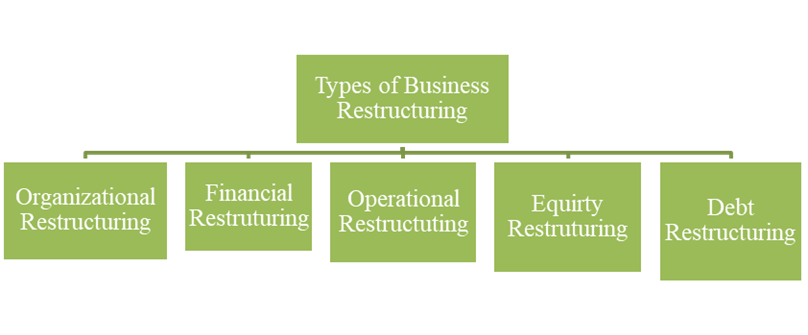
Types of Business Restructuring
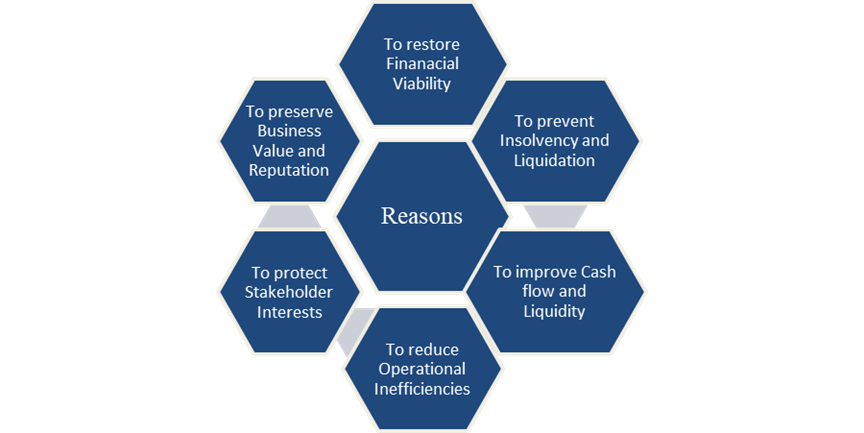
Need for Business Restructuring
- Economies of Scale and vertical Integration
Both vertical integration and economies of scale can be achieved through business restructuring. By allowing enterprises to spread their fixed expenses over a larger number of units, economies of scale lower the cost of capital and increase production volume. This increases profit margins and boosts shareholder confidence. Businesses that own a portion of the supply chain benefit from economies of vertical integration, which lessens reliance on suppliers and improves control over production and quality, giving them a competitive advantage. Both tactics improve profitability and simplify operations.
- Risk Reduction
Businesses can expand into new areas, improve their supply chains, diversify their operations, and more through business restructuring. This is accomplished by acquiring firms and selling off underperforming divisions of the company. This guarantees the best possible use of an organization’s resources, promotes long-term, sustainable corporate growth, and increases shareholder confidence.
- Utilization of Surplus Funds
It is essential to invest in businesses that have a high potential for long-term growth and to achieve the organization’s long-term goals when a company has excess capital and no viable internal investment prospects.
- Solvency issues
The company occasionally experiences low profitability, which could jeopardize its long-term viability and solvency position. Corporate restructuring provides focused solutions to address the root causes of low profitability, excessive debt-to-equity ratios, inefficient asset usage, etc. It could entail simplifying operations to cut expenses, selling off unproductive sections to concentrate on successful ones, or combining with or purchasing other companies to expand market share and boost productivity. These actions aid in increasing a company’s profitability and boosting its solvency.
- Tax Benefits
Businesses in India are permitted to utilize the tax advantages associated with mergers and acquisitions (M&A). Additionally, participating corporations benefit financially from capital gains tax advantages for particular types of share transfers.
The amalgamating company’s cumulative loss and unabsorbed depreciation may be carried forward under Section 72A of the Income Tax Act of 1961. Businesses can optimize the value of their M&A deals and reduce their tax burden while increasing profitability, growth, and financial efficiency by proactively utilizing these tax benefits.
Financial and Tax Considerations in Restructuring
There are several financial and Tax considerations in business restructuring, such as follows:
- Valuation of Assets and Liabilities
Accurate valuation of assets, liabilities, and business units is fundamental to restructuring. Valuation impacts share exchange ratios, consideration payable, debt restructuring terms, and overall financial viability of the restructuring scheme.
- Capital structure optimization
Restructuring often aims to achieve an optimal mix of equity and debt. Financial considerations include reduction of excessive leverage, conversion of debt into equity, and alignment of capital structure with long-term business objectives.
- Cash flow and Liquidity Assessment
A detailed analysis of cash flows is essential to assess the organization’s ability to meet ongoing obligations during and after restructuring. Liquidity planning ensures continuity of operations and avoids financial distress.
- Tax neutrality of Restructuring Transactions
Certain restructuring transactions, such as mergers and demergers, may qualify for tax-neutral treatment under applicable tax laws, subject to fulfillment of prescribed conditions.
- Capital Gains Tax Implications
Transfer of assets, shares, or undertakings may attract capital gains tax unless specifically exempted. Tax impact on shareholders and the company must be carefully assessed.
- Carry forward and Set-off of losses
The ability to carry forward and set off accumulated losses and unabsorbed depreciation post-restructuring is a key tax consideration, subject to statutory conditions.
Risk Assessment and Due Diligence in Restructuring
Business Restructuring During Financial Distress
Role of Corporate Governance in Restructuring
- Corporate governance plays a critical role in ensuring that business restructuring is conducted in a transparent, lawful, and accountable manner. Given that restructuring decisions significantly affect the financial position, control, and rights of various stakeholders, a robust governance framework is essential to maintain integrity and trust throughout the restructuring process.
- One of the primary roles of corporate governance in restructuring is to ensure informed and responsible decision-making. The Board of Directors is responsible for evaluating restructuring proposals, assessing associated risks, and determining whether the restructuring aligns with the long-term strategic objectives of the organization. Effective governance ensures that such decisions are based on due diligence, independent advice, and sound judgment.
- Corporate governance also ensures compliance with legal and regulatory requirements. Restructuring transactions must adhere to corporate laws, securities regulations, insolvency frameworks, and contractual obligations. Governance mechanisms ensure timely approvals, accurate disclosures, and adherence to statutory procedures, thereby reducing legal and regulatory risks.
- Another important role of corporate governance is the protection of stakeholder interests. Restructuring affects shareholders, creditors, employees, and other stakeholders. Governance principles such as fairness, transparency, and accountability help ensure equitable treatment and prevent abuse of power or conflict of interest during restructuring.
- Corporate governance further facilitates risk oversight and control. Through committees such as the Audit Committee and Risk Management Committee, the Board monitors financial, legal, and operational risks arising from restructuring and ensures that appropriate mitigation measures are implemented.
- Additionally, governance promotes transparency and disclosure. Clear communication and disclosure of restructuring objectives, processes, and outcomes enhance stakeholder confidence and support informed approvals by regulators and investors.
Conclusion
In conclusion, business restructuring optimizes a company’s operations for long-term success and helps enterprises manage a constantly changing market landscape. Corporates seek to reduce their cost of capital and enhance overall performance through organizational, operational, or financial restructuring. Businesses may now access new development opportunities, boost shareholder value, and ultimately maintain their position as industry leaders by embracing change and business process.
Careful planning, strategy implementation, and a deep comprehension of the company’s particular goals and difficulties are all necessary for successful corporate restructuring. Businesses may now make a well-reasoned choice that puts them on a course for long-term sustainable growth and resilience in a market that is becoming more and more competitive by taking into account the several methods described in this article.