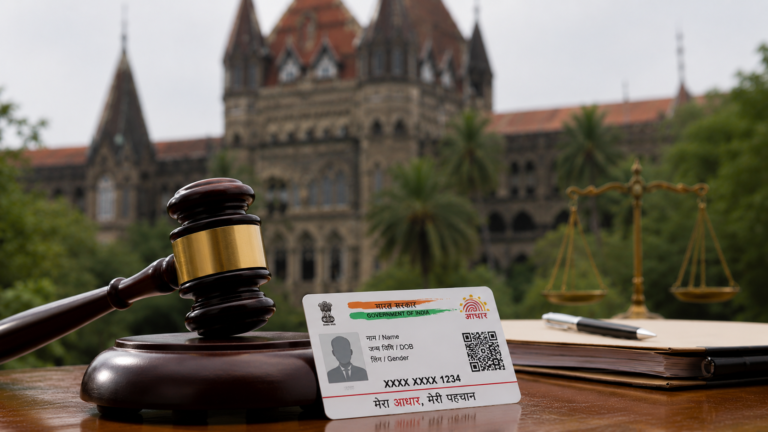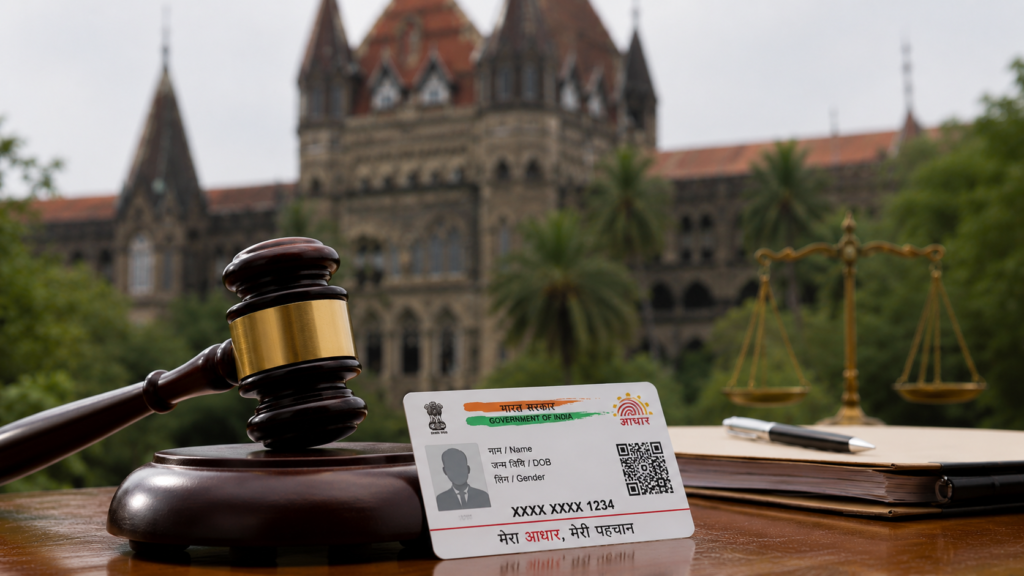
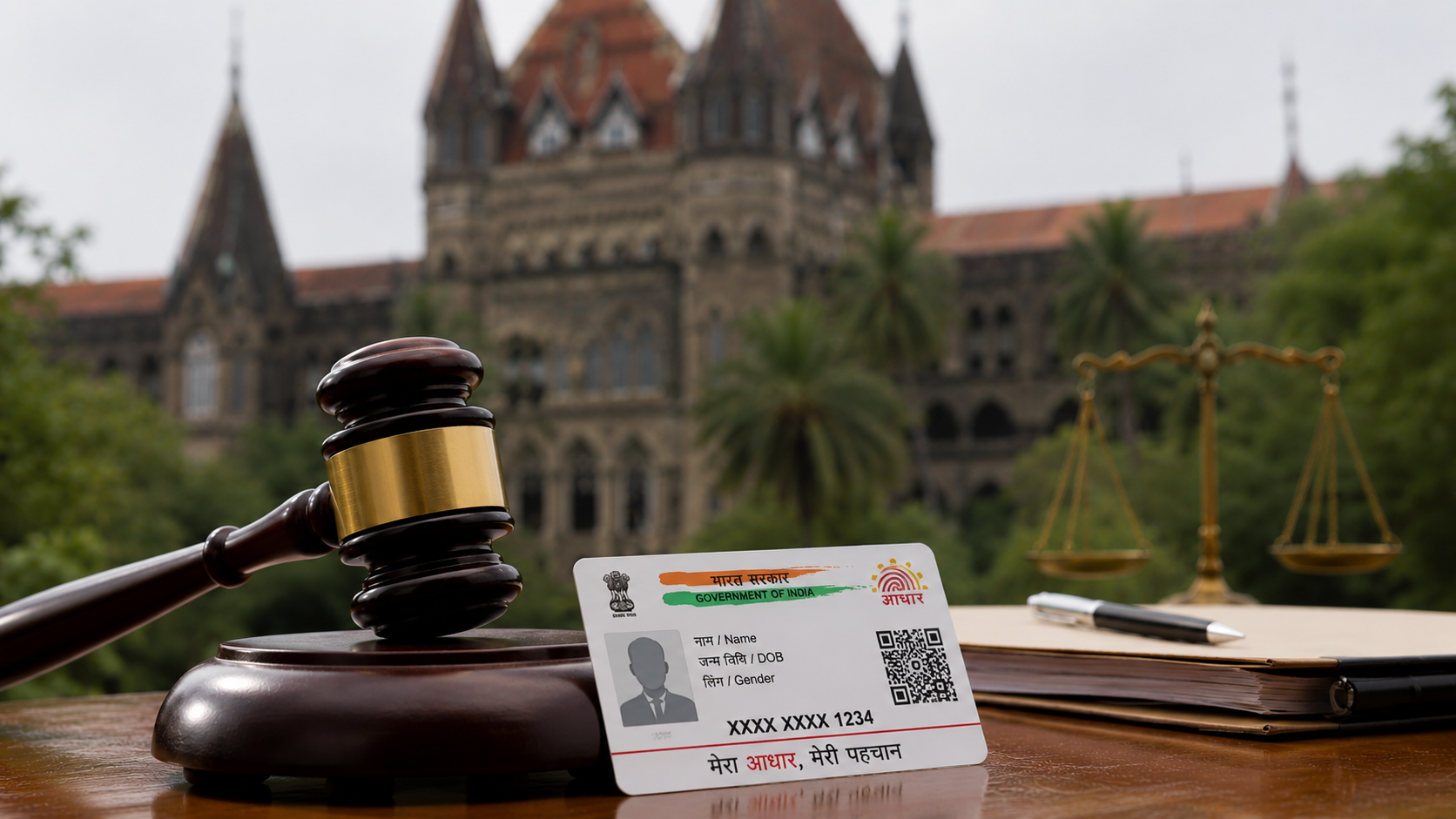
The Bombay High Court recently issued significant directions to the Unique Identification Authority of India (UIDAI), stating that citizens should not suffer because of Aadhaar biometric errors, biometric mismatches, or technical irregularities in Aadhaar records. The Court emphasized that Aadhaar-related systems must remain citizen-centric, facilitative, and constitutionally compliant.
The ruling came in the case of Rohit Nikalje & Anr v. Regional Officer, UIDAI & Ors, where the Court addressed the unnecessary hardship faced by genuine Aadhaar holders due to administrative confusion and biometric anomalies.
What the Bombay High Court Said?
A division bench comprising Justices Ravindra V. Ghuge and Hiten S. Venegavkar observed that genuine residents cannot be denied remedies merely because a technological or biometric anomaly exists in the system.
The Court noted that several citizens are forced to repeatedly visit different offices without proper guidance regarding Aadhaar correction procedures. According to the Bench, such situations lead to:
- Unnecessary hardship for citizens
- Denial of access to essential services
- Administrative confusion
- Avoidable litigation before constitutional courts
The Court clearly stated that maintaining database integrity is important, but it should not come at the cost of citizens’ rights and convenience.
Directions Issued to UIDAI
To reduce the hardships faced by genuine Aadhaar holders, the Bombay High Court issued multiple directions to UIDAI, including:
1. Written Guidance for Citizens
UIDAI must provide proper written guidance explaining the available remedies and procedures for Aadhaar correction or re-enrolment.
2. Citizen Facilitation Mechanism
Regional offices must maintain facilitation centers to help citizens resolve Aadhaar-related issues efficiently.
3. Time-Bound Processing
Applications submitted by genuine applicants must be decided within four weeks if no legal impediment exists.
4. Humane and Citizen-Centric Approach
The Court directed UIDAI authorities to adopt a practical and humane approach while handling biometric mismatch and Aadhaar suspension issues.
Background of the Case
The case involved 19-year-old twin brothers, Rohit and Rahul Nikalje, who had been issued Aadhaar cards during childhood in 2012. However, when they attempted to update their biometrics in 2022, they faced multiple contradictory communications from authorities.
The brothers were:
- Asked to update their Aadhaar details
- Then advised to apply for cancellation
- Later informed that cancellation procedures were revoked
- Eventually told that their Aadhaar numbers were suspended
This confusion affected their provisional admissions and insurance requirements for sporting activities such as horse riding.
The Bombay High Court observed that if childhood biometrics were incorrectly recorded, the applicants themselves could not be blamed for such errors.
Why This Judgment Is Important?
This Bombay High Court judgment is significant because Aadhaar has become essential for accessing various public and private services in India. Biometric mismatches and technical errors can severely impact:
- Education admissions
- Banking services
- Insurance facilities
- Government schemes
- Identity verification processes
The ruling reinforces the principle that technology should assist citizens rather than create obstacles.
Aadhaar Biometric Errors and Citizens’ Rights
The Court’s observations underline an important constitutional principle: administrative systems must remain fair, accessible, and citizen-friendly.
Citizens should not be compelled to undergo repeated office visits or prolonged litigation because of technical failures beyond their control. The judgment strengthens accountability for digital governance systems and encourages authorities to prioritize public convenience.
Conclusion
The Bombay High Court’s directions to UIDAI mark an important step toward ensuring that Aadhaar-related technical problems do not unfairly burden citizens. By emphasizing a citizen-centric and humane approach, the Court has highlighted the need for efficient grievance resolution and responsible digital governance.
As Aadhaar continues to play a critical role in everyday life, this judgment may help strengthen procedural safeguards for millions of citizens facing biometric or technical irregularities.