
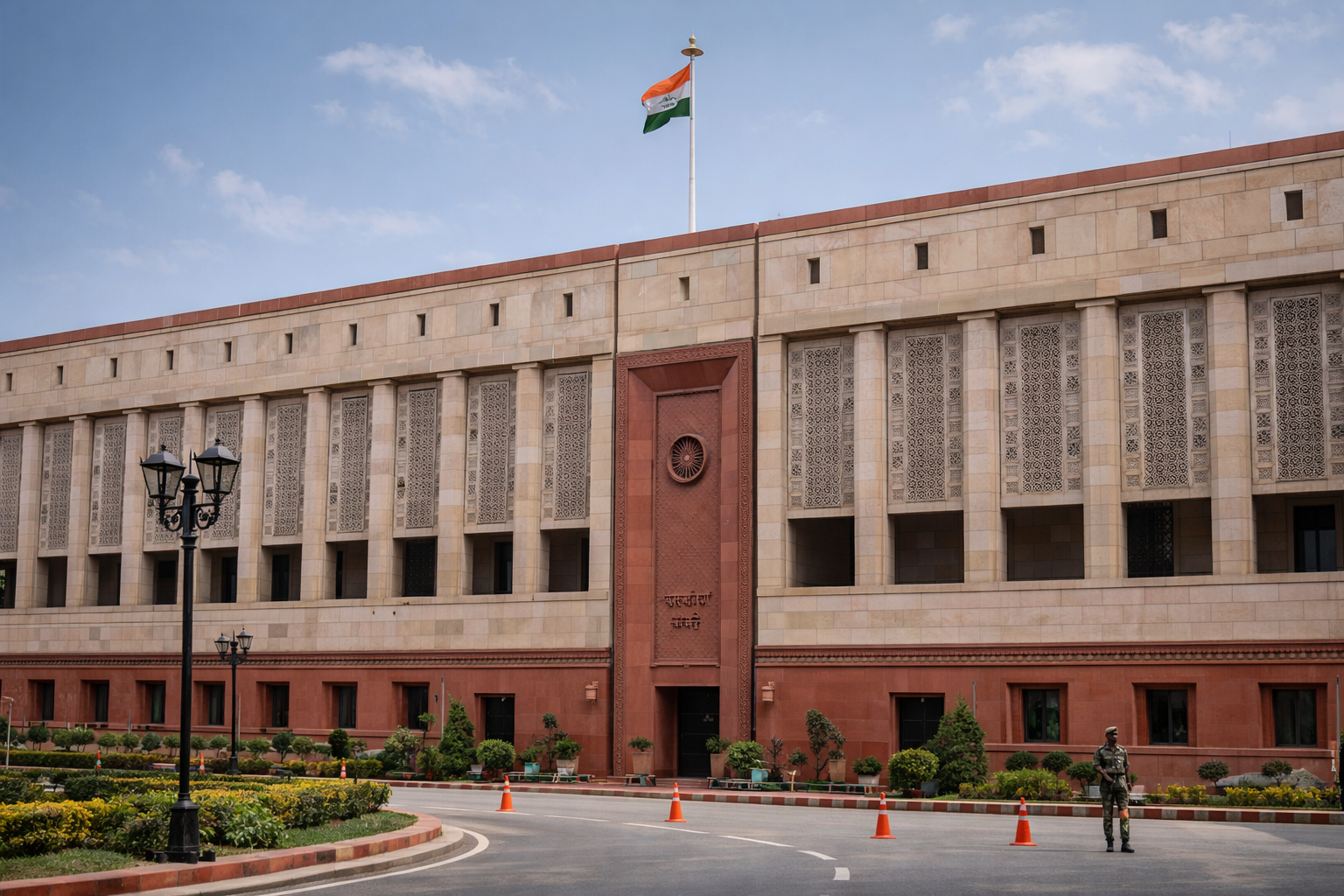
The Lok Sabha rejects 131st Amendment Bill, blocking the proposal to expand the strength of the Lok Sabha from 550 to 850 members. This development has major implications for delimitation and the implementation of women’s reservation in India.
Why Lok Sabha Rejects 131st Amendment Bill?
The Lok Sabha rejects 131st Amendment Bill after it failed to secure the required two-thirds majority:
- 278 votes in favour
- 211 votes against
- Fell short of constitutional requirement
As a result, the government also withdrew:
- Union Territories Laws (Amendment) Bill, 2026
- Delimitation Bill, 2026
Key Proposals in the 131st Amendment Bill
The Constitution (131st Amendment) Bill, 2026 aimed to:
- Increase Lok Sabha seats from 550 to 850
- Remove the freeze on seat allocation based on the 1971 Census
- Allow recalculation of representation using updated population data
This would have paved the way for a fresh delimitation exercise after decades.
Impact After Lok Sabha Rejects 131st Amendment Bill
The Delimitation Bill, 2026 was intended to:
- Set up a Delimitation Commission
- Redraw constituency boundaries
- Allocate seats based on latest population figures
Additionally, the Union Territories amendment bill proposed related changes for Delhi, Puducherry, and Jammu & Kashmir.
Women’s Reservation Impact
The reform package was linked to the Constitution (106th Amendment) Act, 2023.
Since the Lok Sabha rejects 131st Amendment Bill:
- Implementation of 33% reservation may be delayed
- Debate continues on whether reservation should be independent
Political Opposition and Concerns
The rejection reflects strong political divisions:
- Opposition parties supported women’s reservation but opposed linking it to delimitation
- Leaders from southern states raised concerns about loss of representation
- Critics argued that population-based redistribution may favour northern states
This created a major roadblock for the proposed reforms.
Conclusion
The rejection of the Constitution (131st Amendment) Bill, 2026 marks a major legislative setback for electoral reforms in India. While the objective was to modernise representation and enable women’s reservation, political disagreements have stalled the process.
The issue now shifts back to policymakers, whether to decouple delimitation from reservation or build broader consensus for future reforms.