
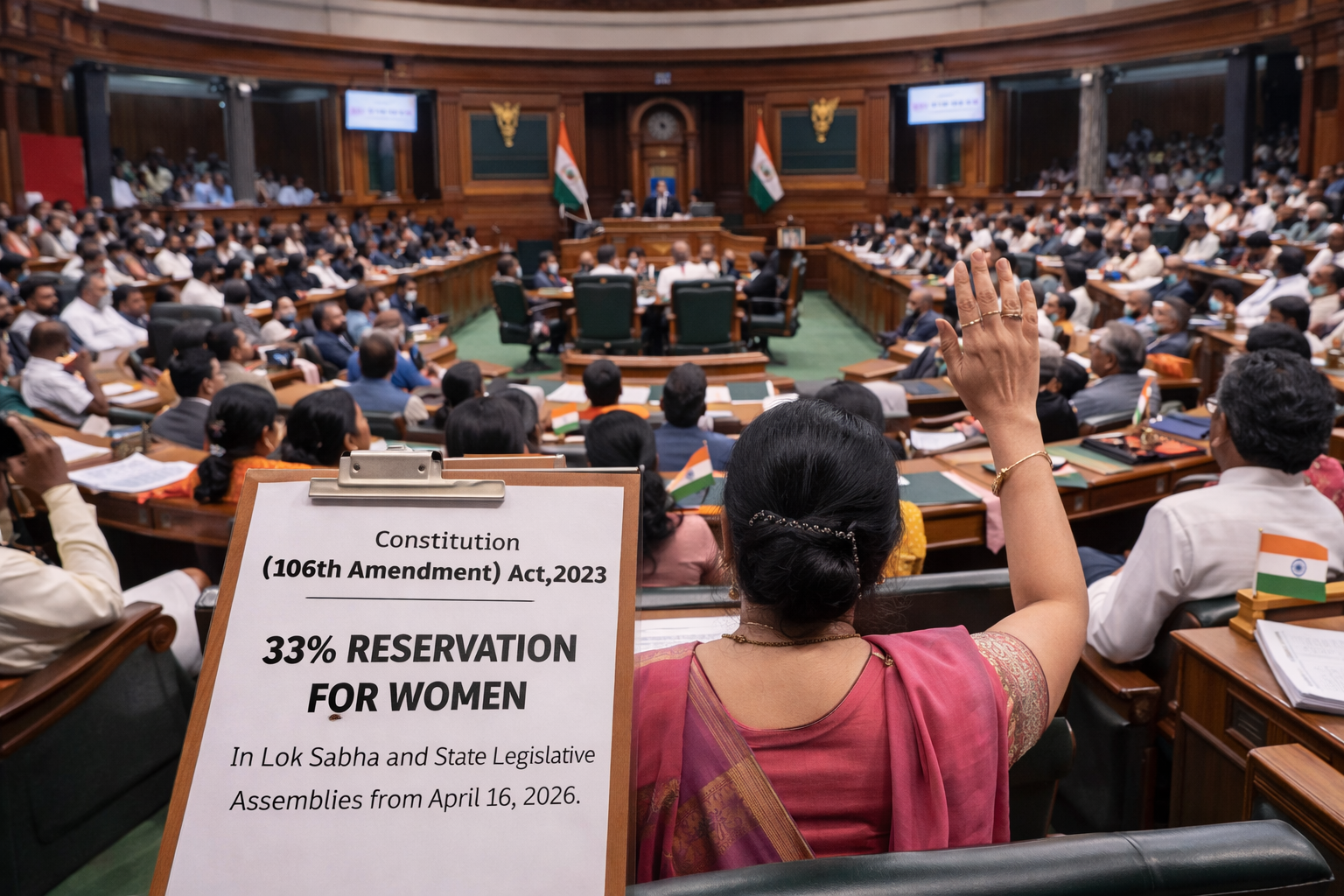
The Government of India has officially notified the Constitution (106th Amendment) Act, 2023, bringing into force the long-awaited provision for 33% reservation for women in legislatures. The law came into effect on April 16, 2026, marking a major milestone in India’s constitutional and political landscape.
However, despite the notification, the implementation of the reservation will not be immediate and is subject to a future delimitation exercise.
What Women’s Reservation Law India Provides?
The Women’s Reservation Law India ensures:
- 33% reservation in the Lok Sabha
- Reservation in all State Legislative Assemblies
- Coverage of the Delhi Legislative Assembly
- Sub-quota for SC/ST women
This reform aims to significantly improve women’s political representation.
Women’s Reservation Law India and Delimitation Delay
Although the law is now in force, its actual implementation depends on:
- A fresh Census conducted after the notification
- A subsequent delimitation exercise to redraw constituency boundaries
Until these steps are completed, the current composition of Parliament and State Assemblies will remain unchanged.
Electoral Reforms Linked to Women’s Reservation Law India
The Centre has introduced additional legislative proposals to enable implementation:
- Constitution (131st Amendment) Bill, 2026
- Delimitation Bill, 2026
- Union Territories Laws (Amendment) Bill, 2026
These reforms aim to restructure India’s electoral framework, including a proposed increase in Lok Sabha strength from 550 to 850 seats.
Debate Around Women’s Reservation Law India
While there is broad support for women’s reservation, the linkage with delimitation has sparked debate:
- Opposition parties argue that reservation should be implemented immediately
- Southern States’ leaders fear reduced representation due to population-based delimitation
- Concerns have been raised about potential regional imbalance in Parliament
Critics allege that tying reservation to delimitation could delay its benefits and shift political dynamics.
Constitutional and Legal Significance
The notification of the 106th Amendment is a landmark development because it:
- Strengthens gender representation in politics
- Introduces structured reservation with sub-quotas
- Links electoral reform with population-based representation
- Reflects a long-standing demand for inclusive governance
Conclusion
The enforcement of the Constitution (106th Amendment) Act, 2023 marks a historic step toward gender equality in Indian politics. However, the real impact of the law will only be seen after delimitation, making its timeline uncertain.
The coming years will be crucial in determining how effectively India balances representation, federal concerns, and electoral reforms.