
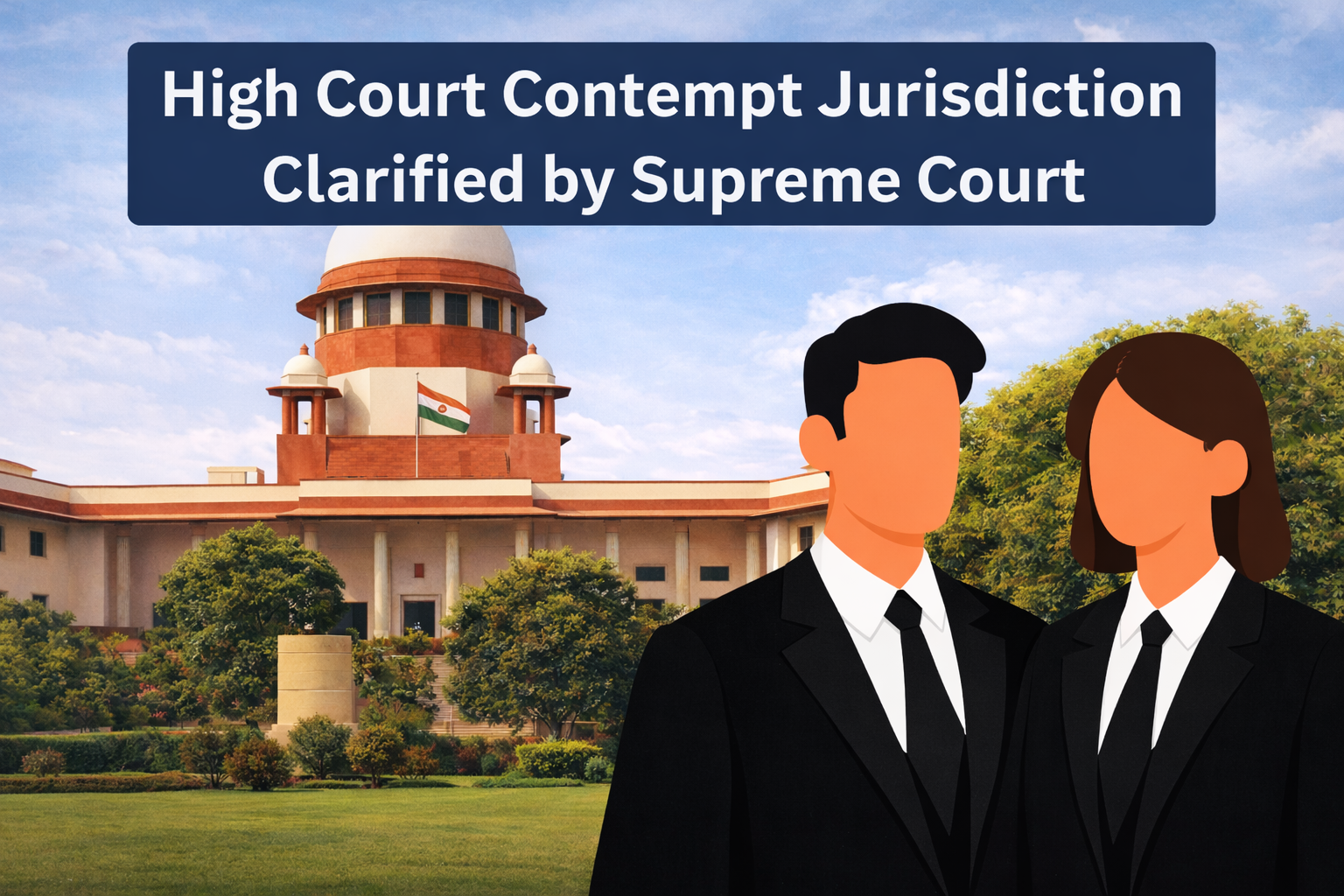
The High Court contempt jurisdiction remains enforceable even after a High Court judgment merges with a Supreme Court order, the Supreme Court of India has ruled.
In a significant decision, the Court clarified that the doctrine of merger does not extinguish the High Court contempt jurisdiction where the Supreme Court has merely affirmed the judgment without issuing fresh directions.
This ruling strengthens the authority of High Courts to ensure compliance with their own orders.
Background of the Case
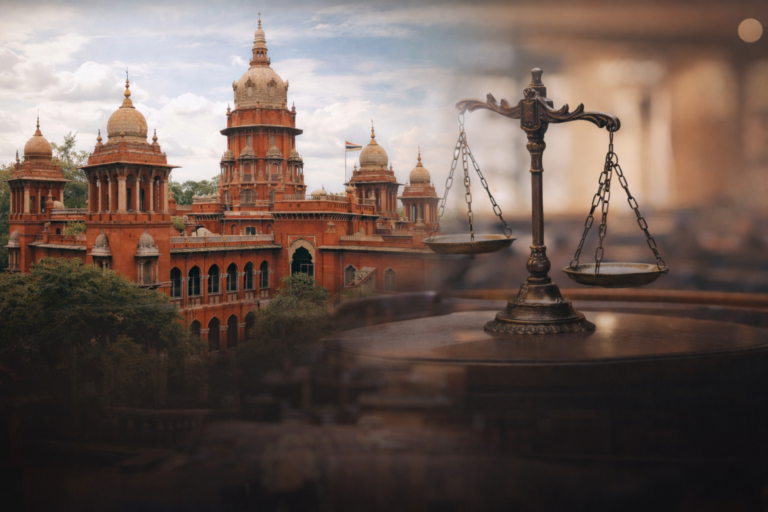
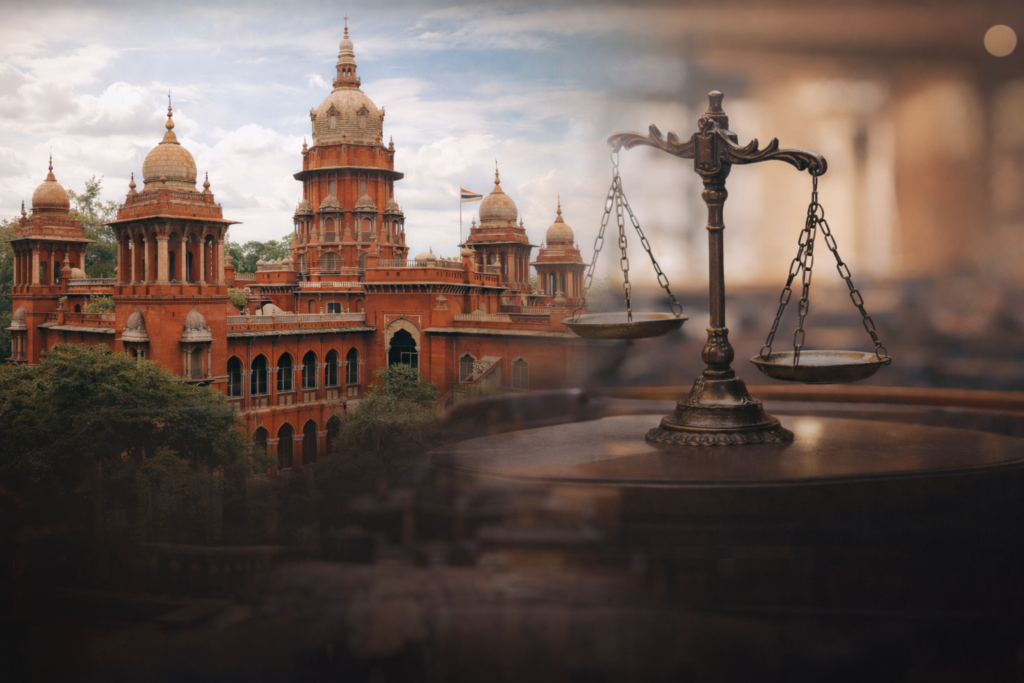
The dispute arose from directions issued by the Madras High Court on April 23, 2007, concerning employees seeking absorption in the Corporation of Chennai. The High Court had directed that identified employees be considered for absorption in order of seniority whenever vacancies arose.
Alleging non-compliance with these directions, the United Labour Federation filed a contempt petition before the High Court. However, the High Court dismissed the plea in 2022, holding that since its original judgment had merged with the Supreme Court’s order in connected civil appeals, it lacked jurisdiction to entertain the contempt petition.
Supreme Court’s Findings
A Bench of Justice Prashant Kumar Mishra and Justice N.V. Anjaria disagreed with this reasoning. The Court observed that while the doctrine of merger applies once an appeal is decided, the applicability of merger does not eliminate the High Court’s contempt powers.
The Bench clarified:
- If the Supreme Court merely affirms a High Court judgment
- And does not issue fresh or independent directions
- The operative directions remain those of the High Court
Therefore, alleged violation of those directions can still be examined by the High Court under its contempt jurisdiction.iliarization, the Collegium aims to improve both administrative efficiency and quality of judicial functioning.
Contempt Jurisdiction Remains Intact
ActThe Court emphasized that the High Court’s powers under:
- Section 12 and Section 15 of the Contempt of Courts Act, 1971
- Article 215 of the Constitution of India
continue to operate despite merger of the judgment.
The Supreme Court cautioned that holding otherwise would flood it with contempt petitions in every case where an appeal is dismissed by merely affirming a High Court order.
Final Decision
Setting aside the Madras High Court’s order, the Supreme Court restored the contempt petition for fresh consideration on merits. The Court clarified that it had not expressed any opinion on whether contempt was actually made out.
The decision reinforces the principle that the doctrine of merger does not override the High Court’s constitutional power to enforce compliance with its own orders.