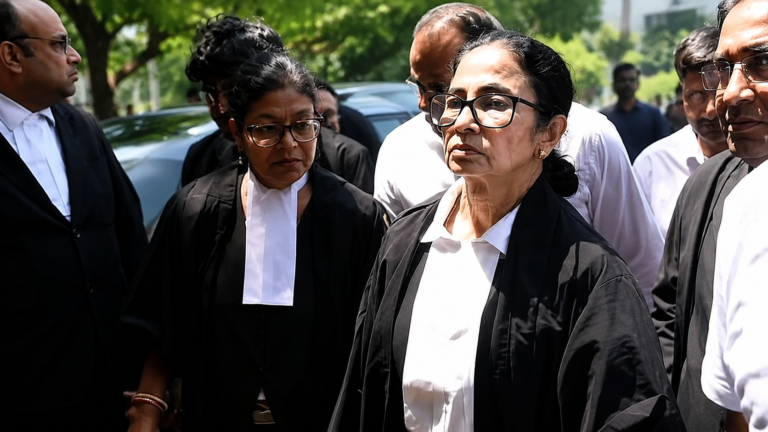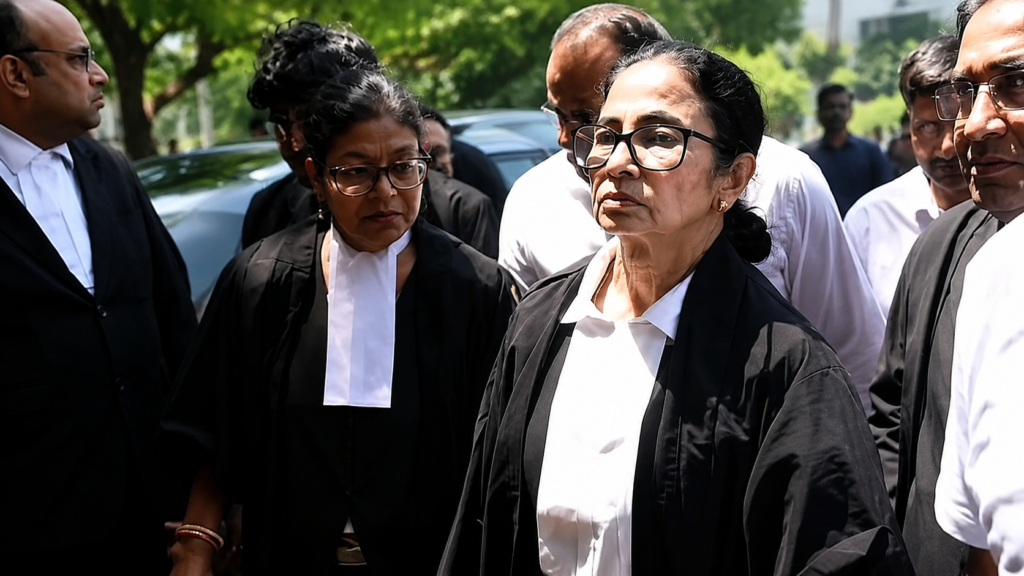


The Allahabad High Court highlighted the urgent need for litigation impact assessment while addressing the growing backlog of cases in Uttar Pradesh. The Court stressed that without proper planning, new laws continue to increase litigation and delay justice.
Background of the Case: litigation impact assessment
The Bench took up the matter on its own motion to address the widening gap between the institution and disposal of cases. It noted that despite continuous filings, the pendency of cases has not reduced significantly.
Earlier, the Court had proposed the establishment of 9,149 new courts based on the judge-to-population ratio. However, considering financial and infrastructural constraints, the State approved the creation of 900 courts for the financial year 2025–2026.
Court’s observations on litigation impact assessment
A Division Bench of Justices Alok Mathur and Amitabh Kumar Rai emphasized that the right to a speedy trial forms a core part of constitutional guarantees. Therefore, all three pillars, judiciary, executive, and legislature, must act collectively to reduce delays.
Importantly, the Court suggested introducing a Litigation Impact Assessment mechanism. This would require lawmakers to evaluate how a proposed law may increase litigation before it is enacted.
Why litigation impact assessment is important?
The Court observed that every new law either creates, modifies, or extinguishes rights. As a result, such changes often lead to increased litigation.
For instance, the Court referred to amendments in cheque bounce laws, which led to a surge in cases and required dedicated magistrates in many districts. Had proper assessment been conducted earlier, authorities could have planned additional courts and resources in advance.
Thus, a Litigation Impact Assessment can help:
- Predict future case loads
- Plan judicial infrastructure
- Allocate financial and human resources effectively
- Reduce long-term pendency
Direction to the State Government
The Court also addressed delays in decision-making. It observed that the State government raised queries that were already answered or publicly available. The Bench cautioned against raising unnecessary queries merely to delay the process.
It directed the State to take a final decision expeditiously, preferably within one month. The matter has been listed for further hearing, with directions for state representatives to appear if no decision is made.
Why This Judgment Matters?
This case highlights a structural issue in India’s legal system, rising litigation without proportional growth in judicial capacity. The Court’s suggestion introduces a forward-looking solution rather than a reactive one.
If implemented, Litigation Impact Assessment could significantly improve planning and reduce judicial backlog across the country.
Issue for Discussion
Should India make Litigation Impact Assessment mandatory before passing new laws to control judicial pendency?
Conclusion
The Allahabad High Court made a strong case for litigation impact assessment. This approach can reduce case backlog and improve justice delivery across India.