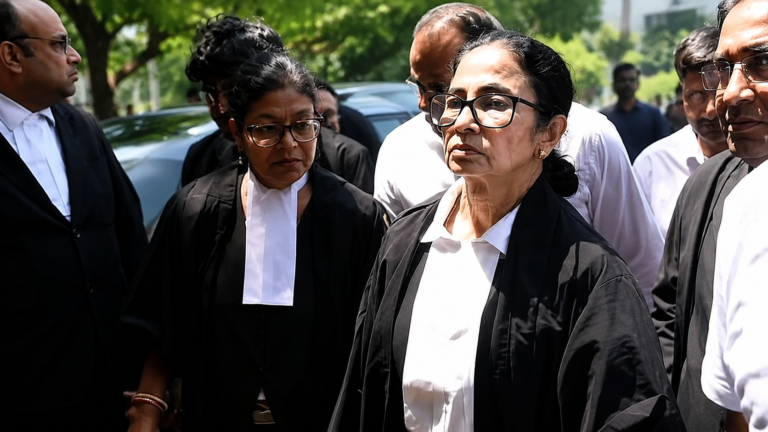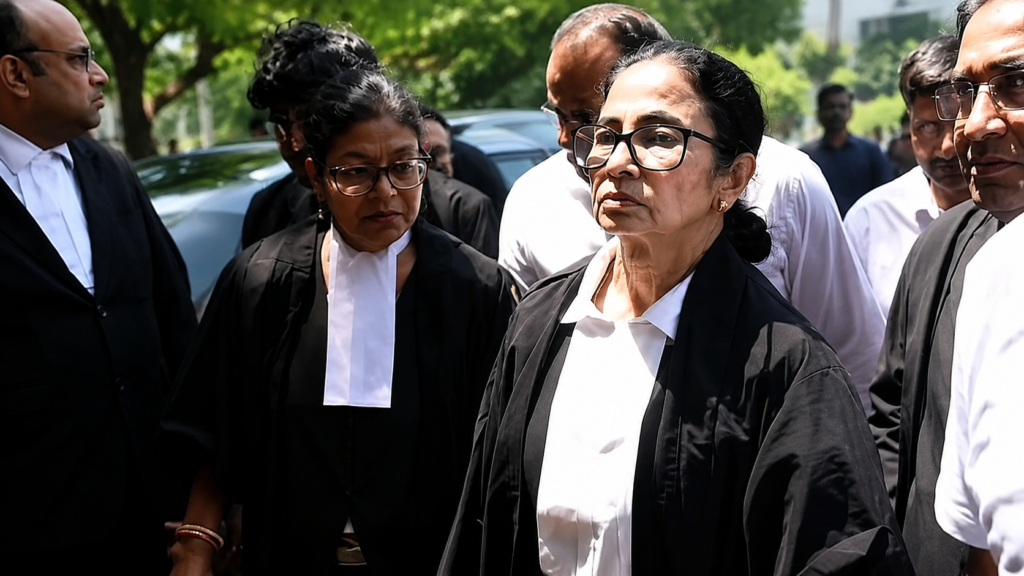
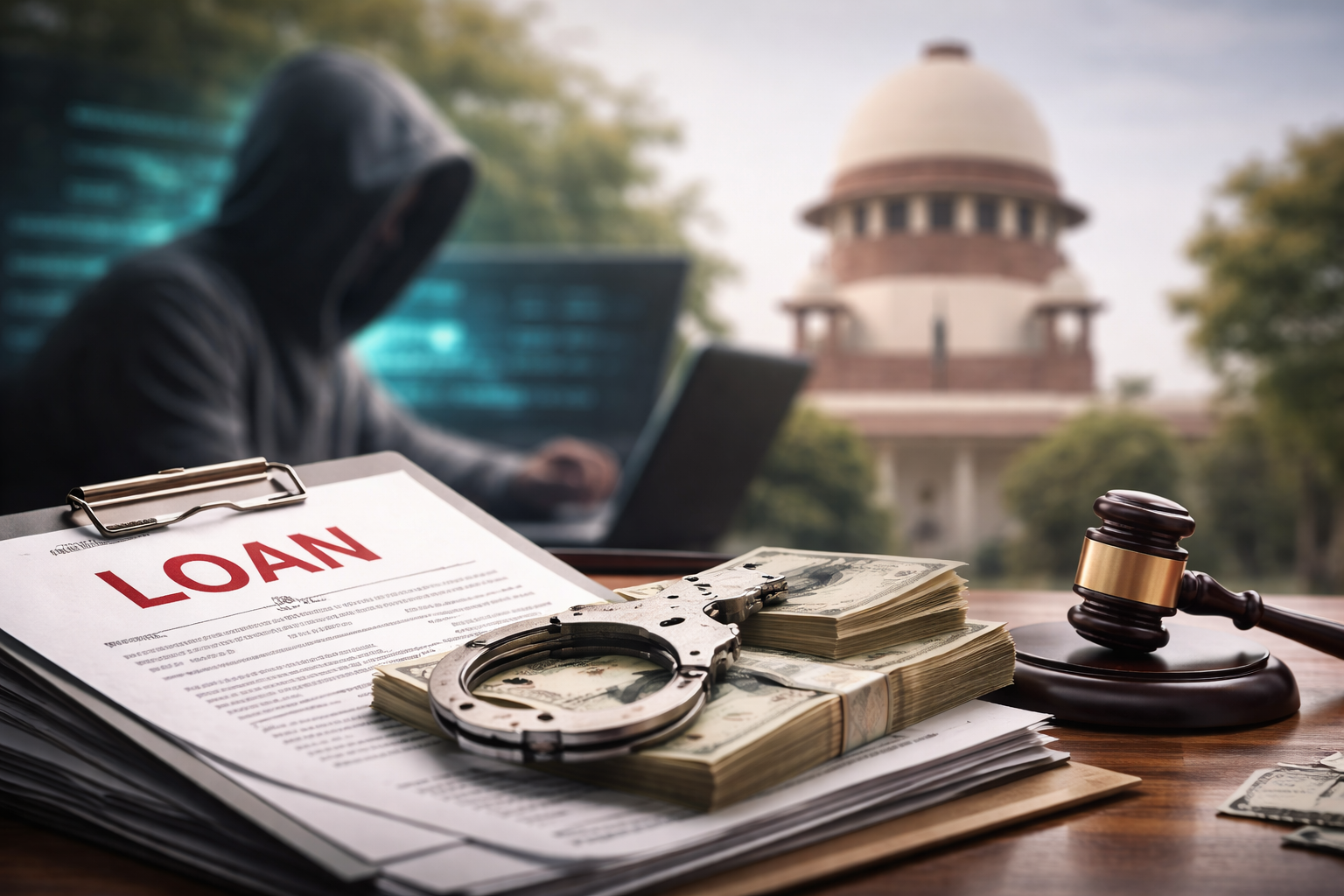
The Supreme Court, while hearing a suo motu case on digital arrest scams, has warned that banks are becoming a liability due to negligence and alleged connivance in fraudulent transactions.
Hearing a suo motu case on digital arrest scams, a Bench comprising Chief Justice of India Surya Kant and Justices Joymalya Bagchi and Ujjal Bhuyan Anjaria issued a series of directions aimed at improving coordination between enforcement agencies and strengthening mechanisms to trace and recover defrauded money.
Supreme Court on Digital Arrest Scams and Bank Accountability
During the hearing, CJI Surya Kant made strong remarks against banks, stating that officials have often failed to discharge their fiduciary responsibility.
“We have seen bank officials are completely hand in glove with the accused in these cases of digital arrest,” the CJI observed.
He emphasised that banks act as trustees of public money and warned against reckless lending and oversight failures.
“These banks are becoming a liability. Banks should know that they are custodians of the money entrusted to them. That trust should not be broken,” he said.
The Chief Justice further pointed out that several fraudulent entities receive bank loans and later surface in insolvency proceedings before forums such as the NCLT and NCLAT, compounding financial losses.
Background of the Suo Motu Case
In October 2025, the Supreme Court took suo motu cognisance of digital arrest scams after a senior-citizen couple wrote to the Court stating that scammers impersonating CBI, Intelligence Bureau and judicial officials had defrauded them of ₹1.5 crore.
In December 2025, the Court ordered a pan-India CBI probe into the scam network operating behind such digital arrests.
Government and RBI Measures Highlighted
Attorney General for India R Venkataramani, appearing before the Court, informed the Bench that:
- Banks are now deploying AI-based systems to detect suspicious transactions
- Mule bank accounts have been detected during the implementation of RBI-mandated safeguards
- An inter-departmental committee has been constituted by the Central government
- The CBI has identified ₹10 crore amassed through digital arrest scams
Supreme Court Issues Fresh Directions
Reiterating the need for coordinated action, the Supreme Court directed multiple authorities to act in tandem:
- CBI to identify and investigate digital arrest scam cases
- RBI to take corrective steps at the issuing bank level
- MeitY to ensure time-bound compliance by digital intermediaries
The Court also took note of a draft Memorandum of Understanding (MoU) and a Standard Operating Procedure (SOP) prepared to deal with digital arrest scams.
SOP to Be Implemented Nationwide
Issuing strict timelines, the Court ordered:
- Draft MoU to be finalised within four weeks
- Union Ministry of Home Affairs to formally adopt and implement the RBI SOP dated January 2, 2026
- Temporary debit holds to be enabled by banks to prevent cyber-enabled fraud
- Rules to be notified within two weeks for nationwide inter-agency coordination
The Court underlined that prompt action and cooperation among enforcement agencies, regulators, and banks is critical to tackling the expanding threat of digital arrest scams.
Way Forward
The Supreme Court’s observations signal a clear warning to banks and financial institutions that failure to act responsibly may attract judicial scrutiny. As digital frauds grow more sophisticated, the Court has made it clear that institutional accountability and proactive prevention will be central to safeguarding citizens’ financial security.