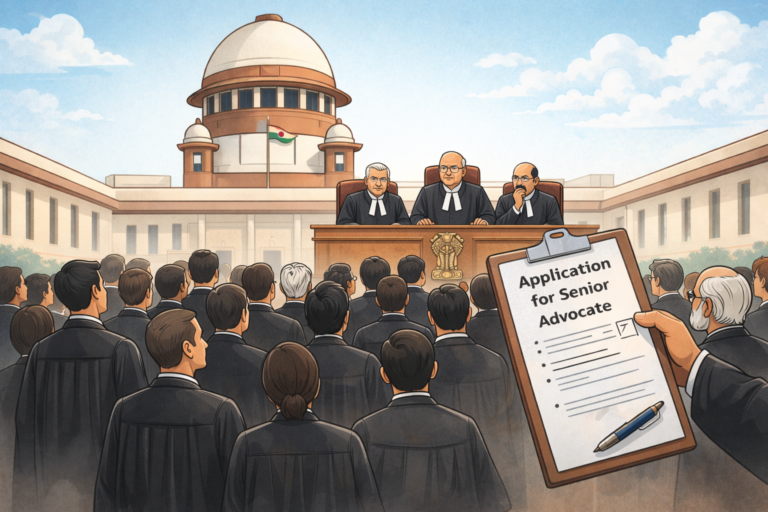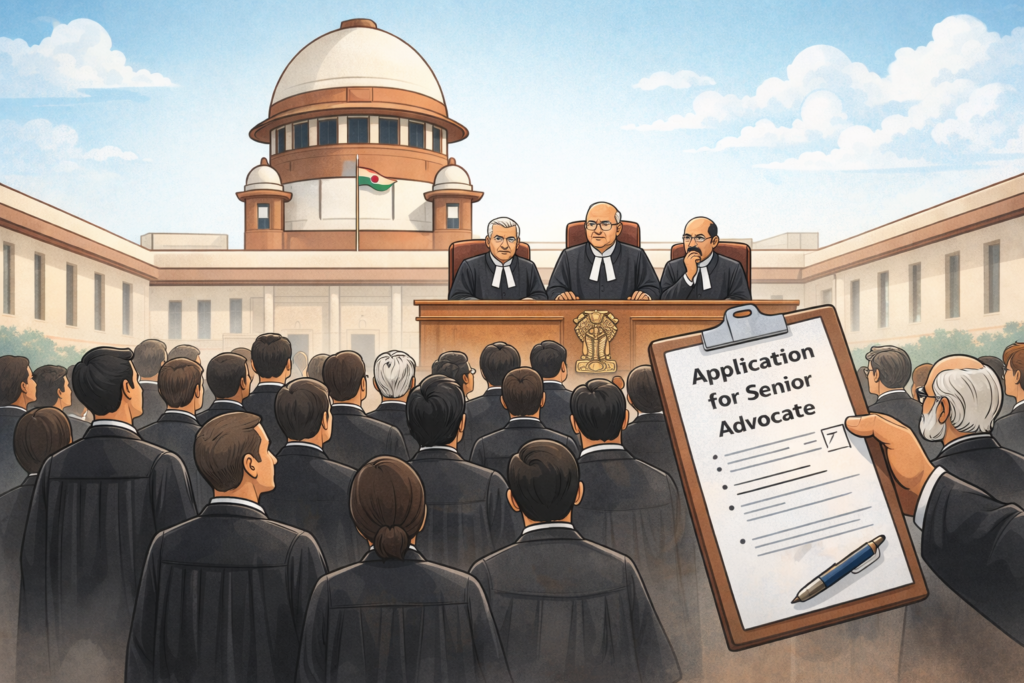

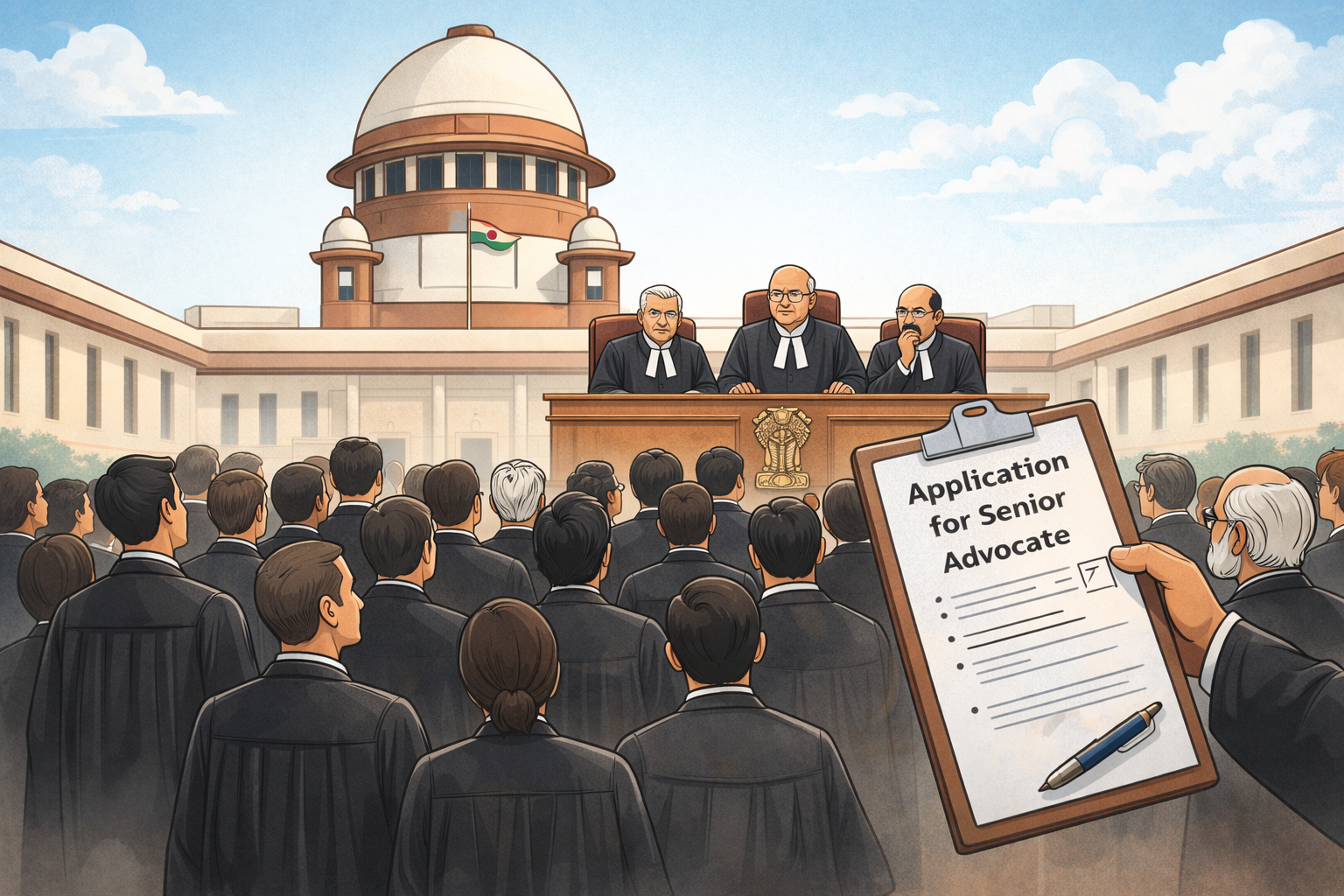
The Supreme Court of India has received 293 applications from advocates seeking Senior Advocate designation. The applications were submitted after notices issued in February 2026 inviting eligible lawyers to apply under the latest designation guidelines.
The Supreme Court Senior Advocate designation process is considered one of the most prestigious recognitions in the Indian legal profession. Advocates who demonstrate exceptional legal ability, professional integrity, and standing at the Bar are considered for this honour.
Stakeholder Suggestions Invited for Senior Advocate Designation
Once the feedback process is complete, the collected inputs will be placed before the Full Court of the Supreme Court for final consideration in accordance with the Guidelines for Designation of Senior Advocates, 2026. The Full Court will evaluate the candidates based on professional merit, integrity, and contribution to the legal field before conferring the designation.
Eligibility Criteria for Supreme Court Senior Advocate Designation
Earlier notifications had clarified that advocates whose applications had not been rejected by the Supreme Court or any High Court in the past two years were eligible to apply. Additionally, lawyers whose applications had not been deferred by any court during the last year were also permitted to submit fresh applications.
The designation of Senior Advocate is one of the highest recognitions in the Indian legal profession and is granted to advocates who demonstrate exceptional expertise, ethical standards, and contributions to the development of law.
Court Questions the Absence of Notice
However, the Court questioned why notice could not be issued even in cases of alleged encroachments.
Justice Bansal observed that procedural safeguards should generally be followed before taking such drastic steps. The Court also raised a pointed query regarding how properties could possess municipal numbers if they were indeed constructed on public streets.
These observations highlight the ongoing legal debate around the legality and fairness of demolition actions carried out by municipal authorities.
Petitioners’ Allegations
The petitioners claimed that the demolition action was arbitrary and carried out immediately after the registration of the FIR in the murder case. They argued that the action appeared selective and motivated.
They also submitted that municipal authorities had been collecting electricity charges and other dues for years, indicating that the properties were previously recognized.
The petitioners warned that further demolition could violate constitutional protections, including rights under Articles 14, 21, and 300A of the Constitution.
Legal Issue Before the Court
The case raises an important legal question:
Can municipal authorities demolish structures allegedly built on public streets without issuing prior notice to the occupants?
The matter is likely to return to the Court soon once the petitioners file a fresh and properly structured petition challenging the demolition action.