


An Overview of Risk Management Advisory
A structured professional service, risk management advisory helps businesses identify, evaluate, manage, and reduce risks that could negatively impact their operations, financial stability, legal compliance, and reputation. Risk management advisory has become a vital governance tool to guarantee organizational resilience and sustainable growth in an increasingly complicated commercial and regulatory environment.
Risk identification, risk assessment, mitigation strategy development, control mechanism installation, and ongoing monitoring are all part of the methodical process of risk management advisory. Strategic, operational, financial, regulatory, and reputational risks are the general categories of hazards. Advisors help management prioritize risks and take appropriate action by assessing the possibility and effect of such risks.
What is Risk Management Advisory
A professional and advisory service called Risk Management Advisory was created to help businesses systematically identify, assess, evaluate, and manage risks that could have an impact on their overall governance, operational effectiveness, financial stability, and legal compliance. In accordance with relevant laws, rules, and corporate governance principles, it offers professional advice to guarantee that risks are handled in a methodical and legally acceptable manner.
Legally speaking, risk management advisory helps businesses carry out their legal obligations under corporate, securities, and industry-specific legislation. It aids in foreseeing potential.
Reasons why it is important
- Ensures Compliance with Legal and Regulatory Requirements
Risk management advisory assists organizations in identifying and complying with applicable laws, regulations, and statutory obligations. This proactive approach reduces the risk of penalties, regulatory sanctions, and legal disputes.
- Protects Organizational Assets and Financial Stability
By identifying financial and operational risks at an early stage, risk advisory helps in preventing losses arising from fraud, inefficiencies, or unforeseen events, thereby safeguarding organizational assets.
- Strengthens Corporate Governance and Oversight
Risk management advisory supports the Board of Directors and senior management in fulfilling their governance responsibilities. It promotes accountability, transparency, and informed oversight of risk-related matters.
- Prevents Operational Disruptions
Risk management advisory identifies weaknesses in processes, systems, and controls. Addressing these risks helps ensure continuity of operations and minimizes disruptions to business activities.
- Mitigates Legal and Compliance Risks
By anticipating potential legal exposures and compliance failures, risk management advisory reduces the likelihood of litigation, penalties, and reputational harm.
- Enhances Informed Decision- Making
A structured assessment of risks enables management to make prudent business decisions by balancing potential risks with expected returns, leading to sustainable business practices.
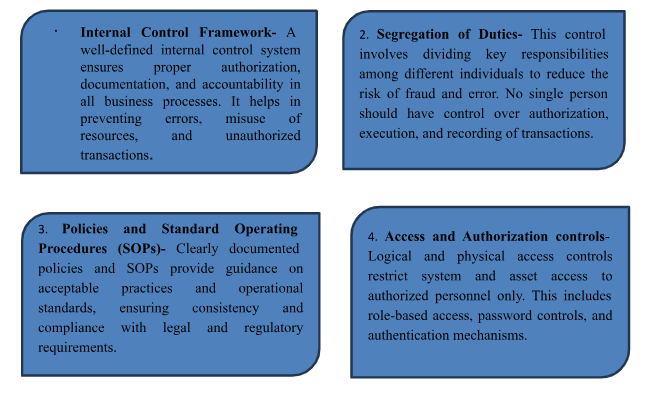
Risk Control and Fraud Detection
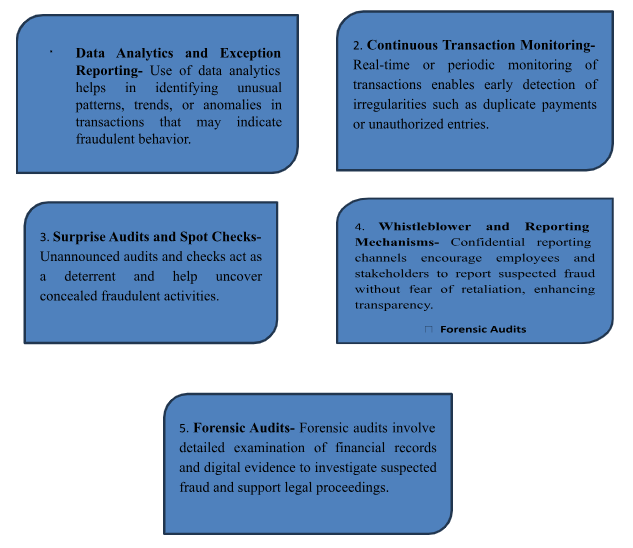
Fraud Detection Techniques
Role of Risk Management Advisory in Corporate Governance
- By ensuring that risks are recognized, evaluated, and managed in an organized, transparent, and legally compliant manner, Risk Management Advisory plays a crucial part in bolstering corporate governance. Effective risk management and governance are inextricably linked in today’s business and regulatory environment, and risk management advisory acts as a link between operational risk control and strategic oversight.
- Supporting the Board of Directors and senior management in carrying out their fiduciary and oversight duties is one of the main functions of risk management advice in corporate governance. By offering impartial risk assessments, risk registers, and regular reports, risk advisers support the Board and Risk Management Committees, facilitating well-informed decision-making and efficient oversight of organizational risks.
- Advisory services for risk management also support legal responsibility and regulatory compliance. Advisors assist firms in meeting legal requirements and preventing regulatory violations by coordinating risk management frameworks with relevant corporate laws, securities rules, and governance codes. This pre-emptive strategy lowers the risk of fines, legal action, and reputational harm.
- The incorporation of risk management into strategic planning is another important function. Risk management advisory guarantees that corporate strategy, significant business decisions, and capital allocation procedures incorporate risk concerns. Organizations can pursue long-term goals while balancing risk and reward because to this alignment.
- Internal control procedures and transparency are further strengthened by risk management advisory. Advisors assist in creating accountability systems and encouraging moral behaviour within the company by assessing internal controls, policies, and procedures. This strengthens trust in the governance structure and boosts stakeholder confidence.
Principles and Aims of Risk Management Advisory
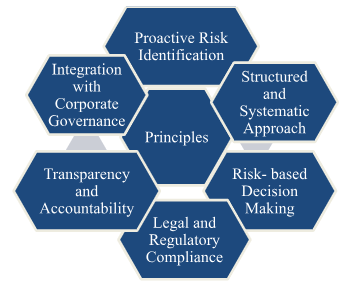
There are some several principles of Risk Management Advisory:
Aims of Risk Management Advisory
- Identification and Assessment of Risks
- Prevention and Mitigation of Losses
- Support to Board and Management
- Ensuring Legal and Regulatory Compliance
- Strengthening Internal Controls and Governance
- Enhancing Organizational Resilience
- Supporting sustainable Growth and Strategy
Conclusion
Risk management advisory has become an essential part of contemporary organizational management and corporate governance. A structured risk management framework is necessary to guarantee legal compliance, financial stability, and moral behaviour in a setting characterized by regulatory complexity, operational uncertainty, and rising stakeholder demands.
Risk management advisory helps well-informed decision-making and fortifies internal control mechanisms by methodically identifying, evaluating, and mitigating risks. It fosters accountability, openness, and a risk-aware culture throughout the company while enabling the Board of Directors and top management to successfully carry out their fiduciary duties.
Essentially, risk management advisory is a strategic governance instrument rather than just a compliance function. It strengthens organizational resilience, protects stakeholder interests, and promotes sustainable long-term growth by incorporating risk concerns into corporate planning and operating procedures.