
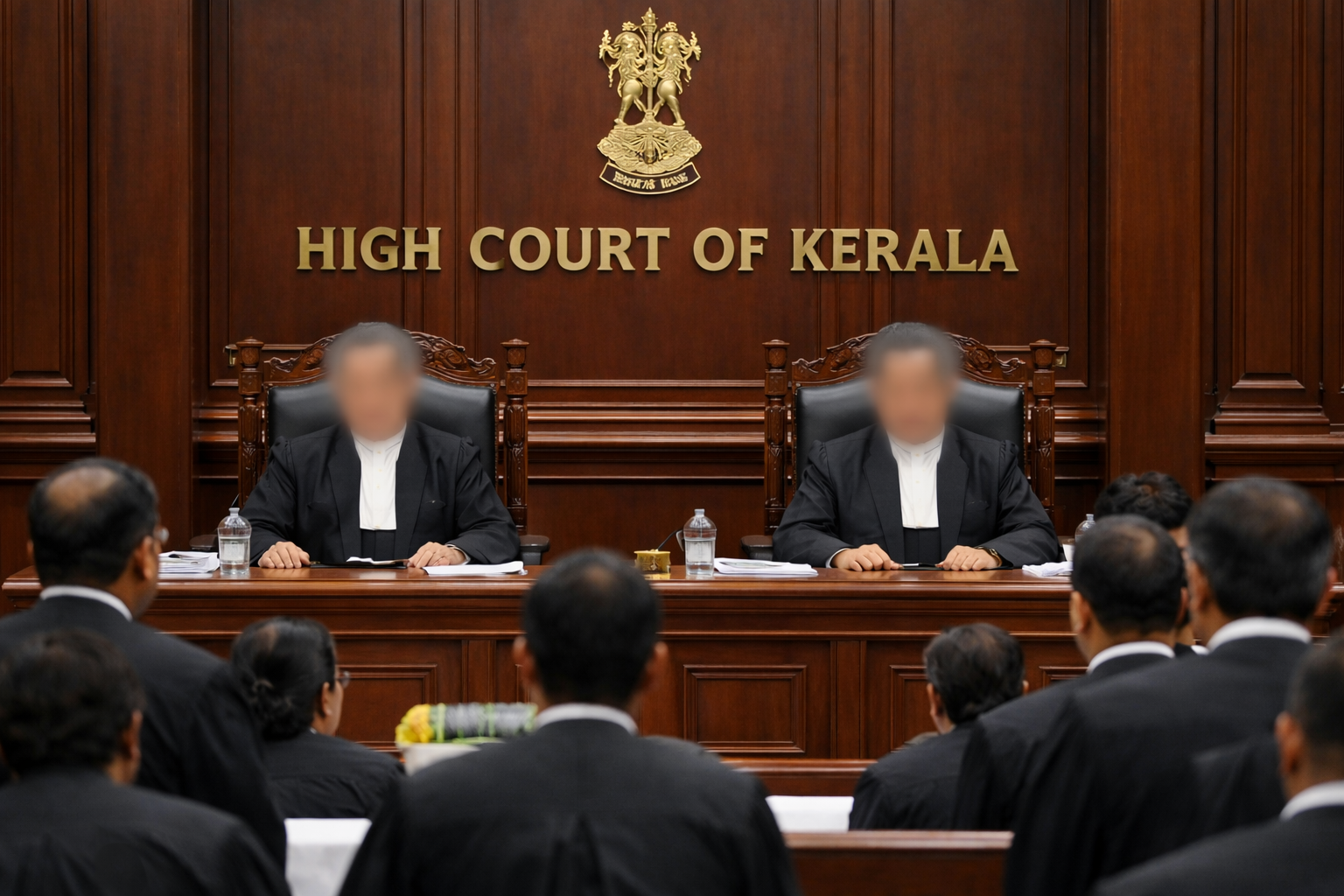
The Kerala High Court has ruled that advocates cannot interfere with or stall execution proceedings in order to recover professional fees from former clients. The Court held that disputes regarding fees must be resolved through appropriate legal remedies and cannot be used as a ground to obstruct a client’s case.
Justice Bechu Kurian Thomas delivered the judgment while dismissing a writ petition filed by two advocates.
Kerala High Court Advocate Fees: Background of the Case
The dispute arose from execution proceedings related to a land acquisition matter. The petitioners, who were earlier counsel for the decree-holders, claimed unpaid professional fees.
After the clients engaged new lawyers for the execution proceedings, the petitioners challenged the change of counsel and attempted to stall the proceedings until their fee claims were resolved.
They also alleged improper filing of vakalath by the new advocates and approached multiple forums, including the Bar Council and District Court, seeking intervention.
Kerala High Court Advocate Fees: Court’s Observations
The Court firmly rejected the petitioners’ claims and observed that:
- A client has the absolute right to change counsel
- An advocate cannot insist on continuing in a case until its conclusion
- Fee disputes must be pursued separately through lawful remedies
- Advocates cannot obstruct proceedings due to unpaid fees
The Court emphasized that professional ethics require advocates to return case files once their engagement ends.
Kerala High Court Advocate Fees: Key Legal Principle
The Court reiterated a well-settled principle:
“An advocate has no lien over case bundles or proceedings.”
It further noted that withholding case records or delaying litigation for unpaid fees is impermissible in law and contrary to professional conduct standards.
Kerala High Court Advocate Fees: Outcome
Finding no merit in the petition, the Court dismissed the writ petition and imposed a cost of ₹50,000 on the petitioners. The amount was directed to be paid to the Kerala State Legal Services Authority within six weeks.
Impact on Legal Practice
This ruling reinforces important aspects of legal ethics and litigation practice:
- Execution proceedings must not be delayed unnecessarily
- Advocates cannot obstruct client proceedings for fee recovery
- Fee disputes must be resolved before appropriate forums
- Client autonomy in changing counsel is protected
Conclusion
The decision of the Kerala High Court strengthens the principle that professional disputes cannot override a litigant’s right to pursue justice. Advocates must follow due process for fee recovery without interfering in ongoing legal proceedings.