
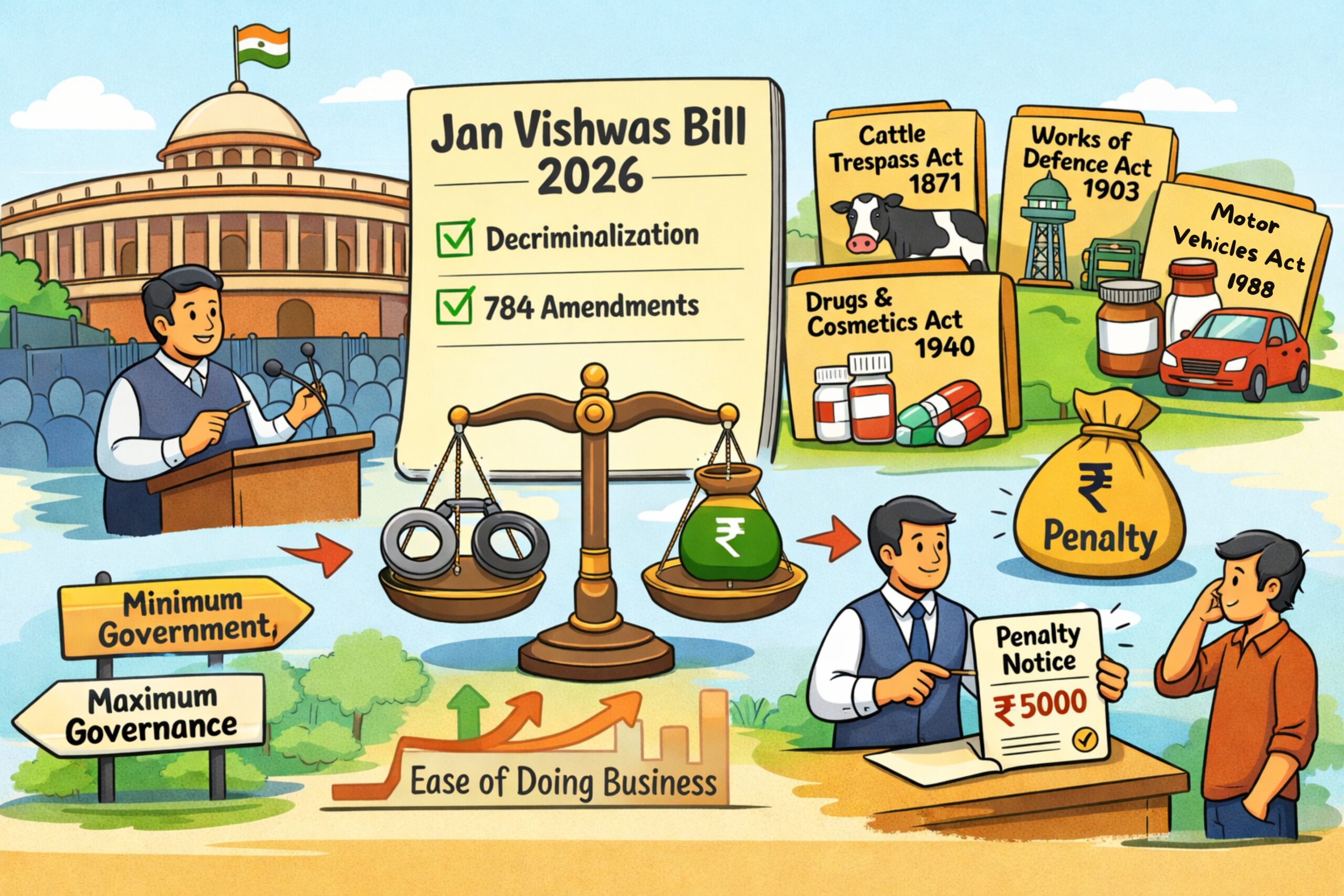
The Jan Vishwas (Amendment of Provisions) Bill, 2026 marks a major shift in India’s regulatory framework by reducing criminal penalties and replacing them with monetary fines. As part of this reform, several important laws, including the Motor Vehicles Act, 1988, Dock Workers (Regulation of Employment) Act, 1948, and Pharmacy Act, 1948-are being updated to promote ease of doing business and reduce legal burden.
Amendments to Motor Vehicles Act, 1988
The Motor Vehicles Act, 1988 is being updated to simplify compliance and reduce procedural complexity.
Key Changes:
- Shift from criminal liability to penalty-based enforcement
- Focus on streamlining vehicle-related compliance
- Reduction in prosecution for minor offences
👉 These changes aim to make road transport regulations more practical and less punitive for individuals and businesses.
Changes to Dock Workers (Regulation of Employment) Act, 1948
The Dock Workers (Regulation of Employment) Act, 1948 governs working conditions at ports.
Key Changes:
- Introduction of graded penalties
- Higher fines for repeat violations
- Removal of unnecessary criminal provisions
👉 This ensures better compliance while avoiding harsh criminal consequences for minor lapses.
Jan Vishwas Bill Reforms in Pharmacy Act, 1948
The Pharmacy Act, 1948 regulates pharmacists and professional standards.
Key Changes:
- Replacement of outdated fines (as low as ₹50) with modern penalty structures
- Introduction of daily penalties for continuing violations
- Emphasis on professional accountability
👉 These updates bring the law in line with modern healthcare and regulatory needs.at caste is not merely a matter of religion, but also of social identity and recognition within a community.
Why Jan Vishwas Bill Amendments Matters
The Jan Vishwas Bill reflects a broader policy shift:
- ✅ Decriminalisation of minor offences
- ✅ Reduced burden on courts
- ✅ Improved ease of doing business
- ✅ Encouragement of voluntary compliance
Instead of fear of imprisonment, the system now focuses on financial penalties and administrative action..
Legal Impact of Jan Vishwas Bill Amendments
These amendments highlight a move from criminal justice enforcement to regulatory governance, ensuring:
- Faster resolution of disputes
- Less litigation
- Better regulatory clarity
This is particularly important for sectors like transport, ports, and healthcare where compliance is frequent and operational..
Conclusion
The Jan Vishwas Bill, 2026 is a significant step toward modernising India’s legal framework. By reforming laws like the Motor Vehicles Act, Dock Workers Act, and Pharmacy Act, the government is aiming to create a more balanced system, one that promotes compliance without over-criminalisation.