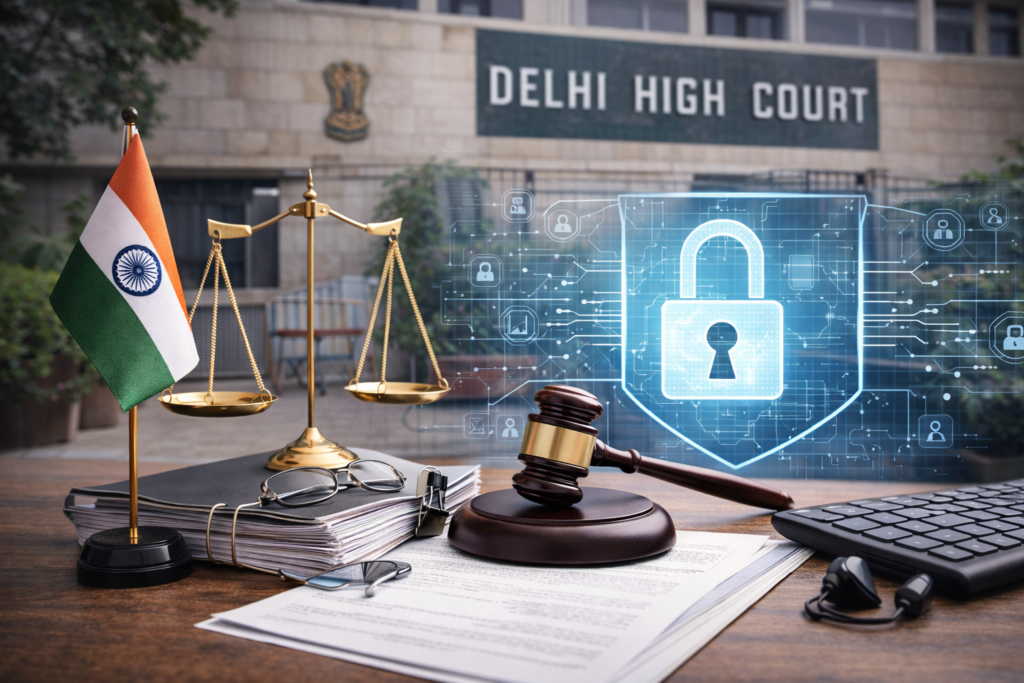

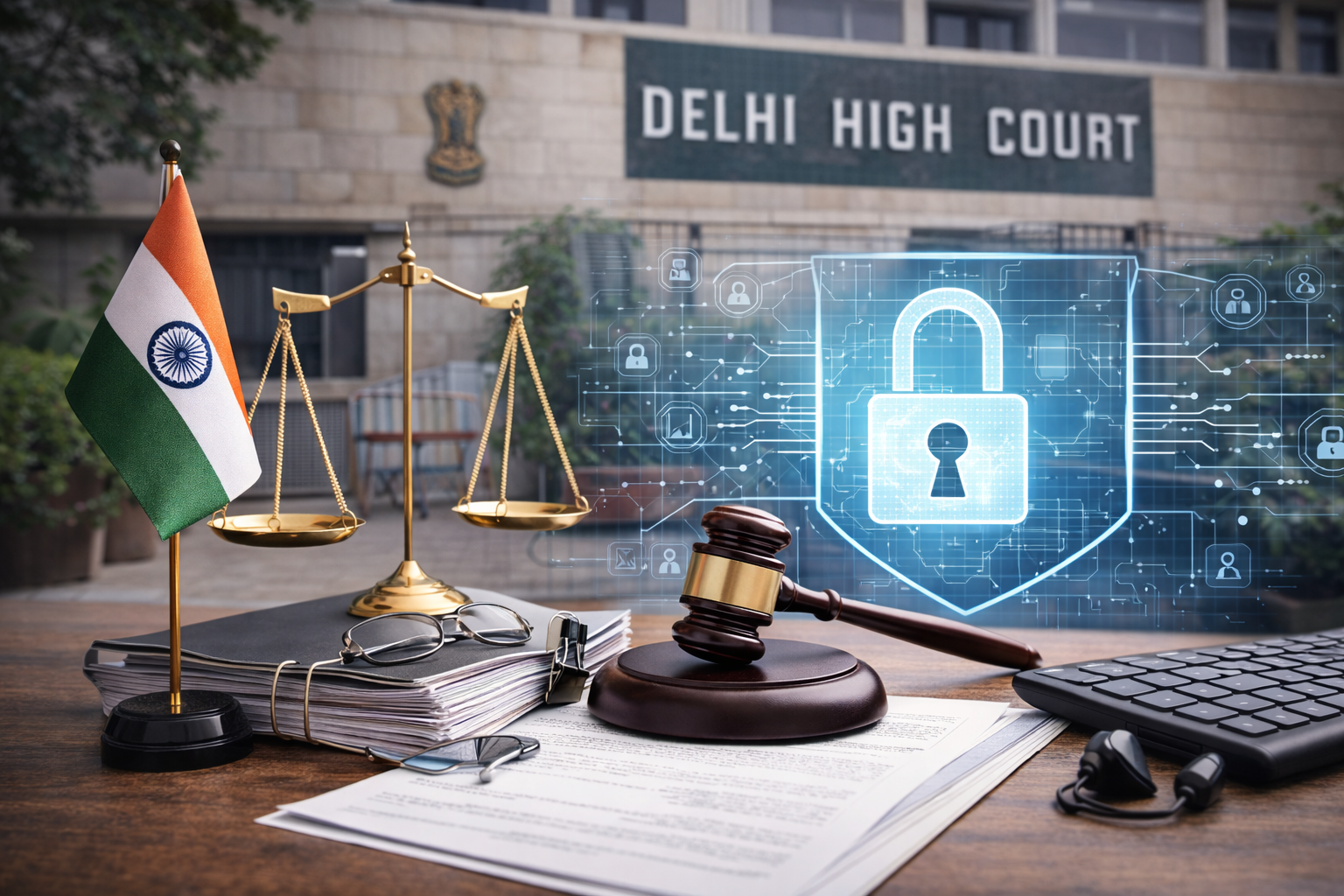
In a significant development for India’s evolving data privacy framework, the DPDP Act PIL has come under judicial scrutiny as the Delhi High Court issued notice to the Union Government of India on February 18, 2026. The petition challenges key provisions of the Digital Personal Data Protection (DPDP) Act, 2023 and the DPDP Rules, 2025, alleging excessive executive control and threats to privacy rights.
The matter has been listed for further hearing in April, signaling potential constitutional review of one of India’s most important digital laws.
Background of the DPDP Act Framework
India enacted the DPDP Act, 2023 following the landmark privacy ruling in Justice K.S. Puttaswamy (Retd.) v. Union of India (2017), which recognized privacy as a fundamental right under Article 21.
The law introduced:
- Consent-based data processing
- Purpose limitation and data minimization
- Creation of the Data Protection Board (DPB)
- Penalties up to ₹250 crore for violations
However, the DPDP Act PIL argues that the framework prioritizes executive power over individual rights.
Bench and Court Proceedings
A division bench comprising D. K. Upadhyaya and Tejas Karia issued notice but declined interim relief. The court directed the Centre to file its counter-affidavit, indicating serious consideration of the constitutional issues raised.
Key Provisions Challenged in the DPDP Act PIL
The petition targets multiple sections of the Act and Rules. The major concerns include:
1. Government Exemptions (Section 17)
The plea alleges that broad exemptions allow government agencies to access personal data without meaningful safeguards. According to the petitioner, vague grounds like “sovereignty and integrity” could enable large-scale surveillance.
2. Executive Control Over Data Protection Board
Sections 18–21 relating to the Data Protection Board are challenged on the ground that the body lacks independence because appointments are dominated by the executive.
3. Appellate Structure and Judicial Oversight
Appeals under the Act lie to the Telecom Disputes Settlement and Appellate Tribunal and then to the Supreme Court, bypassing High Courts. The PIL argues this creates a “closed loop of executive power” and undermines judicial review.
4. Blocking and Penalty Powers
The petition also questions:
- Amendments impacting the RTI framework
- Platform blocking without adequate hearing
- Heavy monetary penalties
- Broad information-seeking powers
Constitutional Grounds Raised
The DPDP Act PIL invokes violations of:
- Article 14 – arbitrariness and unequal treatment
- Article 19(1)(a) – impact on informational autonomy
- Article 21 – right to privacy and due process
The petition argues the framework fails the proportionality test laid down in privacy jurisprudence.
Legal Analysis: Why This Case Matters
This litigation could become a defining moment for India’s digital constitutional law. Key legal fault lines include:
Privacy vs. National Security
Courts will examine whether government exemptions are narrowly tailored or overly broad.
Tribunal Independence
Past rulings have emphasized judicial independence in tribunal structures. The DPB’s composition may face strict scrutiny.
Judicial Review
Any attempt to dilute High Court supervisory jurisdiction traditionally faces strong constitutional resistance.
Implications for Businesses and Data Fiduciaries
For companies and startups, the DPDP Act PIL introduces regulatory uncertainty. Possible impacts include:
- Compliance strategies may need revision
- Increased demand for privacy audits
- Greater litigation risk
- Potential restructuring of the Data Protection Board
Technology companies, e-commerce platforms, and fintech players are particularly exposed.
Broader Impact on India’s Digital Rights Landscape
The petition warns that the current framework could enable:
- Expanded state surveillance
- Long-term behavioral data storage
- Reduced transparency
- Executive-heavy enforcement
If the court intervenes, India may move closer to GDPR-style independent regulation. If not, the balance may tilt toward state security priorities.
What to Watch Next
Key developments to monitor:
- Centre’s counter-affidavit
- Possible interim directions
- Questions on DPB independence
- Potential Supreme Court appeal
The April hearing could set the tone for future challenges to India’s digital governance laws.
Conclusion
The DPDP Act PIL represents one of the most consequential privacy challenges in recent years. As India’s digital economy expands, courts must carefully balance innovation, national security, and fundamental rights. Legal professionals, businesses, and policymakers should closely track this case, as its outcome may reshape India’s data protection regime for years to come.